


The packaging mistakes that quietly delay MedTech launches
Ten reasons sterile packaging validation fails, and how to avoid each one.
Packaging is often the last thing anyone worries about, and the first thing that stalls a launch. When a sterile barrier fails validation, the whole timeline slips. Below are the ten failure modes we see most often in sterile packaging validation, and the concrete step that prevents each one. Every check is one we run in our ISO/IEC 17025-accredited lab.
1. Inconsistent or out-of-spec seals
The sealing process was never properly qualified (OQ/PQ), so seal strength drifts over time. Qualify the process window and monitor seal strength (ASTM F88) so every pack performs the same.
2. Channel leaks and seal defects go undetected
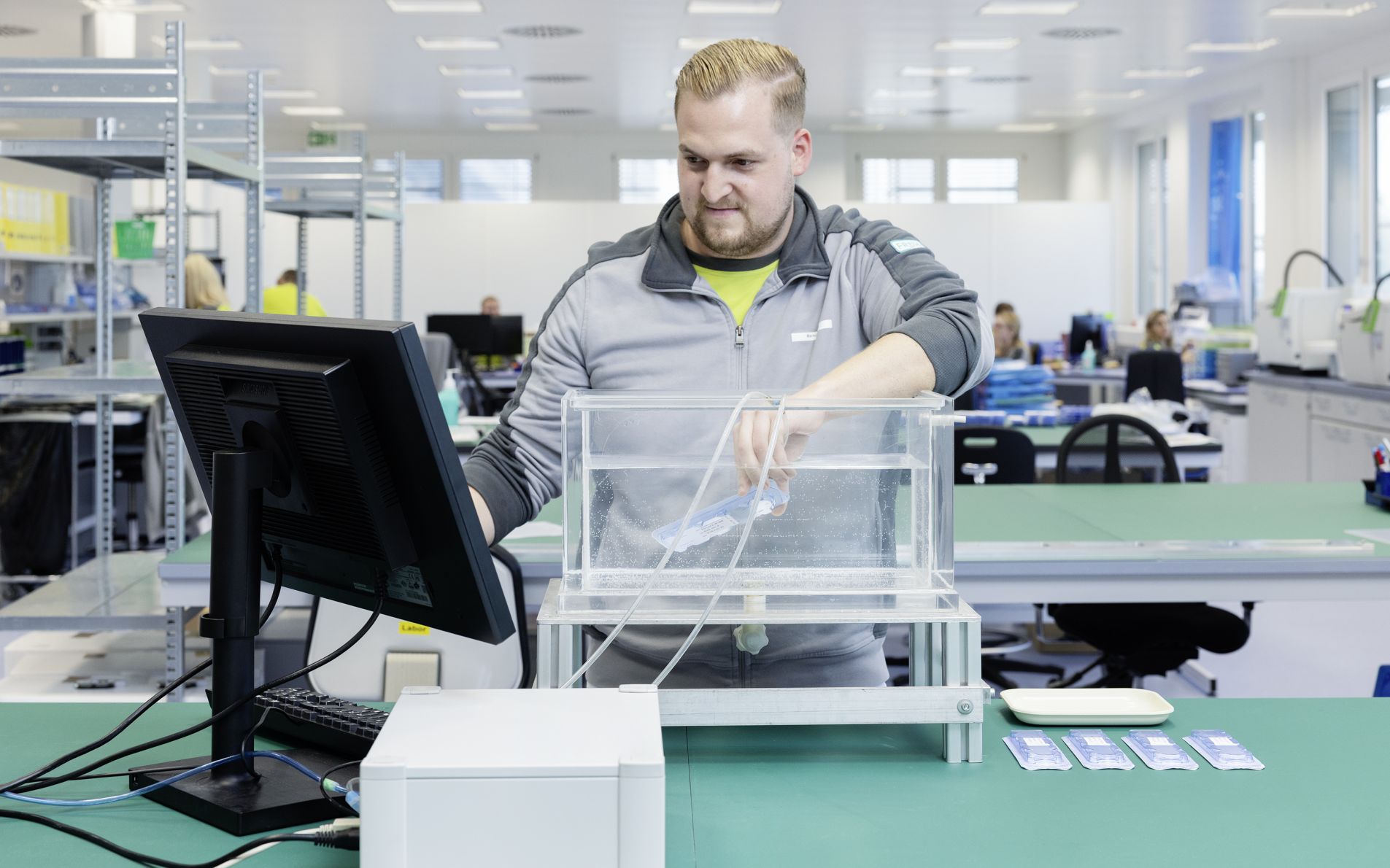
Time-zero inspection misses small channels. Add accredited integrity testing: dye penetration (ASTM F1929 for porous, ASTM F3039 for non-porous), bubble emission (ASTM F2096 / D3078) and visual seam inspection (ASTM F1886).
3. Material and sterilization method do not match
The barrier degrades under the sterilization modality. For gamma or X‑ray irradiation, confirm material compatibility and validate the barrier before release.
4. Shelf-life claims rest on aging assumptions alone
Accelerated aging (ASTM F1980) used without a real-time confirmation plan is not defensible. Run both accelerated and real-time aging so the two confirm each other.
5. The distribution profile is not representative
A transport simulation that does not match the real supply chain (ASTM D4169 or ISTA 3) lets field damage appear that testing never predicted. Choose the profile that reflects actual distribution, and add climate testing (ASTM D4332) where relevant.
6. Integrity is only tested at time zero
If package integrity is not re-tested after aging and distribution, late failures slip through. Test integrity after the stress, not just before.
7. Sharp or heavy devices breach the barrier
Orthopedic and spine implants puncture or abrade standard pouches. Match the packaging design to the device, and verify puncture resistance (ASTM F1306 / EN 14477) and seal strength (ASTM F88) on the actual pack.
8. Aseptic presentation is not validated
A barrier that will not open cleanly in the OR risks contamination at the point of use. Validate peel and presentation, not just the seal.
9. Documentation and traceability gaps
Incomplete or untraceable IQ/OQ/PQ protocols stall the 510(k) or technical file. Build the documentation trail from the start.
10. Changes are not re-validated
A material, supplier or process change that slips through without change control invalidates the original evidence. Tie every change to a re-validation decision.
Trust
Further information or consulting
Need check or consulting of your validation process? Talk to us.